Thursday Plenary Session at NCER 2026

A wide natural wetland landscape with a shallow, clear river running through a valley surrounded by evergreen forests and distant mountains. In the foreground, a field researcher sits near the water taking notes, while another person in an orange safety vest works with a small shovel along the rocky riverbank. Across the river, a group of people restore the habitat by planting and tending vegetation. Several elk walk through a grassy meadow on the left side, and flocks of birds fly above the scene under a bright blue sky with scattered clouds. Wind turbines stand on a ridge in the background.

"Lessons from the Field – A Conversation About ROI in Large-Scale Ecosystem Restoration"

Thursday, April 16
3:30pm–4:50pm
Capitol Ballroom 2, 3, and 4

Moderator

Dr. Chadwin Smith, President, Headwaters Corporation, Kearney, NE

Chad is President of Headwaters Corporation and specializes in working at the nexus of science and policy in large, complex resource management programs. He has worked on several large-scale endangered species recovery and ecosystem restoration programs throughout the United States over the past 25+ years including the Platte River Recovery Implementation Program, the Trinity River Restoration Program, the Middle Rio Grande Endangered Species Recovery Program, the Comprehensive Everglades Restoration Program, the Missouri River Recovery Program, and restoration efforts in coastal Louisiana and the Gulf of Mexico. His expertise includes adaptive management (AM), adaptive governance (AG), review of restoration program structure and function, decision analysis, data synthesis, and engaging multiple stakeholders. Chad holds a B.S. in Fisheries and Wildlife and a Ph.D. in Natural Resource Science/Adaptive Management from the University of Nebraska-Lincoln and a Master of Public Affairs from Indiana University-Bloomington.

Description

This panel session brings together leaders from major restoration initiatives across the U.S. to reflect on lessons learned, long-term outcomes, and the value of sustained investment in restoring complex ecosystems. Participants will share insights from large-scale restoration efforts nationwide, including major river and coastal restoration projects, multi-state river recovery programs, and large ecosystem restoration plans such as in the Everglades. The discussion will explore how “return on investment” can be understood across multiple dimensions, including ecological rehabilitation, water management, and long-term socioeconomic benefits. Panelists will share practical experiences, evolving metrics for measuring success, and the optimism that comes from seeing decades-long restoration investments begin to produce measurable outcomes. The session aims to provide both perspective and inspiration for advancing the next generation of large-scale ecosystem restoration initiatives.


Panelists
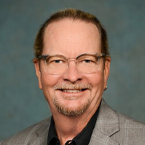
Headshot of Nicholas G. Aumen

Nicholas G. Aumen

Visiting Professor
UF/IFAS School of Natural Resources and Environment,
Loxahatchee, FL

Nick Aumen has been a driving force in the Greater Everglades Priority Ecosystem Sciences program under the UF School of Natural Resources and Environment focusing on the restoration of this vital ecosystem. His 15-year journey as an aquatic ecologist at Everglades National Park saw him leading a team that tracked the park’s ecological recovery. Prior to this, as Research Director at the South Florida Water Management District, he managed a large team of scientists dedicated to ecosystem restoration research. Educationally, Nick holds a B.S. and M.S. in biology from the University of West Florida and earned his Ph.D. in microbial ecology at Oregon State University. His academic path led him to the University of Mississippi, where he became a tenured Associate Professor of Biology. Now in Florida, he is an affiliate faculty member at Florida Atlantic University and the University of Florida. Nick’s commitment to environmental conservation is evident in his five-year tenure on the Sierra Club’s national Board of Directors, where he served as Vice-President and Treasurer, contributing to the governance of the historic 120-year-old organization with over 750,000 members.

Nick Aumen has been a driving force in the Greater Everglades Priority Ecosystem Sciences program under the UF School of Natural Resources and Environment, focusing on the restoration of this vital ecosystem. His 15-year journey as an aquatic ecologist at Everglades National Park saw him leading a team that tracked the park’s ecological recovery. Prior to this, as Research Director at the South Florida Water Management District, he managed a large team of scientists dedicated to ecosystem restoration research. Educationally, Nick holds a B.S. and M.S. in biology from the University of West Florida and earned his Ph.D. in microbial ecology at Oregon State University. His academic path led him to the University of Mississippi, where he became a tenured Associate Professor of Biology. Now in Florida, he is an affiliate faculty member at Florida Atlantic University and the University of Florida. Nick’s commitment to environmental conservation is evident in his five-year tenure on the Sierra Club’s national Board of Directors, where he served as Vice-President and Treasurer, contributing to the governance of the historic 120-year-old organization with over 750,000 members.

Headshot of Darcy Austin

Darcy Austin

Science Manager
State Water Contractors (SWC)
Sacramento, CA

For over 20 years, Darcy Austin has been a pivotal figure in tackling the complex challenges of the San Francisco Bay-Sacramento-San Joaquin Rivers Delta (Bay-Delta). Her expertise in contaminants and zeal for California’s water issues have been instrumental in understanding the delicate balance between ecology and water supply. Darcy’s academic credentials, a BS in Biology with a focus on Microbiology and Parasitology from Colorado State University, and an MPH with a concentration in Environmental Health and Toxicology from San Diego State University, have equipped her well for her endeavors. In her role, Darcy has been committed to applying the finest scientific methods to address California’s management issues. Since her start with the State Water Contractors (SWC) in 2018, she has directed the funding of over $10 million towards research projects aimed at filling knowledge gaps in the Bay-Delta system and its watersheds. This investment is crucial for demystifying how to maintain a thriving estuarine ecosystem that also serves as a vital water source for millions and an irrigation system for vast farmlands. Key to this mission is the restoration of extensive tidal marshes, floodplains, and salmonid habitats in the Delta and its rivers. Outside of work, Darcy enjoys nurturing her two sons, teaching yoga, gardening, and exploring new places.

For over 20 years, Darcy Austin has been a pivotal figure in tackling the complex challenges of the San Francisco Bay-Sacramento-San Joaquin Rivers Delta (Bay-Delta). Her expertise in contaminants and zeal for California’s water issues have been instrumental in understanding the delicate balance between ecology and water supply. Darcy’s academic credentials, a BS in Biology with a focus on Microbiology and Parasitology from Colorado State University, and an MPH with a concentration in Environmental Health and Toxicology from San Diego State University, have equipped her well for her endeavors. In her role, Darcy has been committed to applying the finest scientific methods to address California’s management issues. Since her start with the State Water Contractors (SWC) in 2018, she has directed the funding of over $10 million towards research projects aimed at filling knowledge gaps in the Bay-Delta system and its watersheds. This investment is crucial for demystifying how to maintain a thriving estuarine ecosystem that also serves as a vital water source for millions and an irrigation system for vast farmlands. Key to this mission is the restoration of extensive tidal marshes, floodplains, and salmonid habitats in the Delta and its rivers. Outside of work, Darcy enjoys nurturing her two sons, teaching yoga, gardening, and exploring new places.

Headshot of Jason Farnsworth

Jason Farnsworth

Executive Director
Platte River Recovery Implementation Program (PRRIP)
Kearney, NE

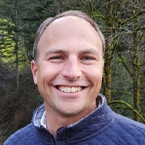
Jason Farnsworth is a Headwaters Corporation principal and serves as the Executive Director of the Platte River Recovery Implementation Program. He is a biologist with experience on a variety of resource planning, management and restoration projects including design and implementation of large-scale adaptive management experiments. Jason has special expertise in the integration of ecological and physical process modeling, monitoring and research to assess the effectiveness of natural resources management activities. Much of his recent work has focused on restoration and management of braided rivers in semi-arid environments, including the complex relationships between hydrology, sediment, and riparian vegetation that control channel morphology in these systems.
Jason Farnsworth is a Headwaters Corporation principal and serves as the Executive Director of the Platte River Recovery Implementation Program. He is a biologist with experience on a variety of resource planning, management and restoration projects including design and implementation of large-scale adaptive management experiments. Jason has special expertise in the integration of ecological and physical process modeling, monitoring and research to assess the effectiveness of natural resources management activities. Much of his recent work has focused on restoration and management of braided rivers in semi-arid environments, including the complex relationships between hydrology, sediment, and riparian vegetation that control channel morphology in these systems.

Headshot of Matt Grabau

Matt Grabau

Adaptive Management Group Manager
Bureau of Reclamation, Lower Colorado River, Multi-Species Conservation
Tucson, AZ

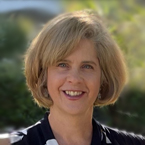
Matt Grabau has been working on riparian restoration and species conservation efforts since 2005, primarily along the Colorado River in the U.S. and Mexico. He received his B.S. (Wildlife Science), M.S., and PhD (Agricultural and Biosystems Engineering) from the University of Arizona in Tucson. He has worked for federal agencies, a non-governmental organization, and as a consultant. Matt has applied his expertise in restoration ecohydrology, project management, and program management to the Lower Colorado River Multi-Species Conservation Program (LCR MSCP) and Minutes 319 and 323 of the US-Mexico Water Treaty. Matt began working with the Bureau of Reclamation in 2023 as the LCR MSCP’s Adaptive Management Group Manager.
Matt Grabau has been working on riparian restoration and species conservation efforts since 2005, primarily along the Colorado River in the U.S. and Mexico. He received his B.S. (Wildlife Science), M.S., and PhD (Agricultural and Biosystems Engineering) from the University of Arizona in Tucson. He has worked for federal agencies, a non-governmental organization, and as a consultant. Matt has applied his expertise in restoration ecohydrology, project management, and program management to the Lower Colorado River Multi-Species Conservation Program (LCR MSCP) and Minutes 319 and 323 of the US-Mexico Water Treaty. Matt began working with the Bureau of Reclamation in 2023 as the LCR MSCP’s Adaptive Management Group Manager.

Headshot of Gina Paduano Ralph

Gina Paduano Ralph

Science Integration Branch Chief
Planning Division
U.S. Army Corps of Engineers (USACE)
Jacksonville, FL

Gina Paduano Ralph has served the public for more than 20-years working with Martin County, Florida, U.S. Fish and Wildlife Service, U.S. Army Corps of Engineers, Jacksonville District, and the Engineering and Research Development Center. She has worked with the Corps since 2009 in various roles including Lead Scientist, Research Ecologist, Environmental Branch Chief, South Florida Section Chief, and Coastal Navigation Section Chief, incorporating sound science into decision making for Corps’ Civil Works initiatives. She currently is the Chief of the Science Integration Branch and the Restoration, Coordination and Verification (RECOVER) Program Manager for the Comprehensive Everglades Restoration Plan. She holds a doctorate in ecology and conservation biology from Florida Institute of Technology, a master’s degree in zoology from Connecticut College and a bachelor’s degree in biology from Rollins College. Dr. Ralph is a graduate of the Florida Natural Resources Leadership Institute and is a skilled leader in conflict management, facilitation, and communication for those working in natural resource management.

Gina Paduano Ralph has served the public for more than 20-years working with Martin County, Florida, U.S. Fish and Wildlife Service, U.S. Army Corps of Engineers, Jacksonville District, and the Engineering and Research Development Center. She has worked with the Corps since 2009 in various roles including Lead Scientist, Research Ecologist, Environmental Branch Chief, South Florida Section Chief, and Coastal Navigation Section Chief, incorporating sound science into decision making for Corps’ Civil Works initiatives. She currently is the Chief of the Science Integration Branch and the Restoration, Coordination and Verification (RECOVER) Program Manager for the Comprehensive Everglades Restoration Plan. She holds a doctorate in ecology and conservation biology from Florida Institute of Technology, a master’s degree in zoology from Connecticut College and a bachelor’s degree in biology from Rollins College. Dr. Ralph is a graduate of the Florida Natural Resources Leadership Institute and is a skilled leader in conflict management, facilitation, and communication for those working in natural resource management.

Headshot of Denise Reed

Denise Reed

Professor Gratis
University of New Orleans
New Orleans, LA

Denise J. Reed is an expert in coastal marsh sustainability and the role of human activities in modifying coastal systems with over 35 years of experience studying coastal issues in the United States and abroad. She has been involved in restoration and resilience planning in coastal Louisiana for over 3 decades, as well as in the California Bay-Delta, San Francisco Bay and Puget Sound, and has published extensively on the effects of sea-level rise on coastal marshes. Dr. Reed has served as a Distinguished Research Professor at the University of New Orleans and spent five years as Chief Scientist at The Water Institute of the Gulf. She has served on numerous boards and panels addressing the effects of human alterations on coastal environments and the role of science in guiding restoration including the NOAA Science Advisory Board, the Chief of Engineers Environmental Advisory Board, and a number of National Academies’ committees including USACE planning, Everglades restoration and the protection of sheltered shorelines. Dr. Reed received her B.S. degree in Geography from Sidney Sussex College, Cambridge and her M.A. and Ph.D. degrees from University of Cambridge, UK.

Denise J. Reed is an expert in coastal marsh sustainability and the role of human activities in modifying coastal systems with over 35 years of experience studying coastal issues in the United States and abroad. She has been involved in restoration and resilience planning in coastal Louisiana for over 3 decades, as well as in the California Bay-Delta, San Francisco Bay and Puget Sound, and has published extensively on the effects of sea-level rise on coastal marshes. Dr. Reed has served as a Distinguished Research Professor at the University of New Orleans and spent five years as Chief Scientist at The Water Institute of the Gulf. She has served on numerous boards and panels addressing the effects of human alterations on coastal environments and the role of science in guiding restoration including the NOAA Science Advisory Board, the Chief of Engineers Environmental Advisory Board, and a number of National Academies’ committees including USACE planning, Everglades restoration and the protection of sheltered shorelines. Dr. Reed received her B.S. degree in Geography from Sidney Sussex College, Cambridge and her M.A. and Ph.D. degrees from University of Cambridge, UK.

April 13-16, 2026

Omaha, Nebraska

Countdown
 
Days
 
Hours
 
Minutes
 
Seconds
 /